

Vintage Bourbon Street Burlesque
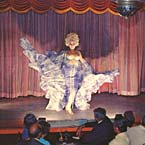
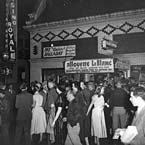
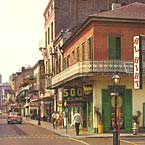
New Orleans in the Forties and Fifties was often heralded as “The Most Interesting City in America.” Bourbon Street was its epicenter, and it became world famous for its concentration of nightclub shows featuring exotic dancers, comics, risque singers, and contortionists, backed by live house bands. Along a five-block stretch, over fifty acts could be seen on any given night. The street gleamed with neon lights as barkers enticed tourists and locals into the clubs to see the featured attractions whose photographs were prominently displayed in the large windows outside. Clubs included the 500 Club, the Sho Bar, and the Casino Royale. It was a glamorous street where men and women dressed in their finest to take in a show.
New Orleans has a history of appealing to the carnal senses. Storyville, the famed red-light district at the turn of the last century, was known for its many houses of prostitution as well as being the birthplace of jazz music until it was closed down in 1917. After vaudeville, and the success of burlesque, striptease became a mainstay on the nightclub stages. In the Forties, stripteasers were in it for the money, as servicemen passed in and out of town looking for a good time. But, as “Stormy,” one of the most popular Bourbon Street dancers at the time said in Cabaret magazine, “Anything you do–no matter what it is–if you do it well enough, can be lifted to an art.”
A competition formed between the club owners to see who could draw the biggest crowd and make the most money. Girls competed with each other by creating acts based upon elaborate themes. Imagination was always the key even as props, beautiful costumes, mood lighting, and original music were incorporated into their acts. This only enhanced the natural beauty and talents of the girls. There were a bevy of exotic dancers like Lilly Christine the Cat Girl, Evangeline the Oyster Girl, Alouette Leblanc the Tassel Twirler, Kalantan the Heavenly Body, Rita Alexander the Champagne Girl, Blaze Starr, Linda Brigette, the Cupid Doll, and Tee Tee Red.
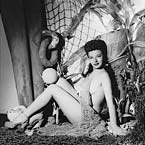
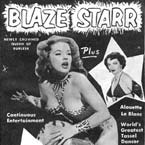
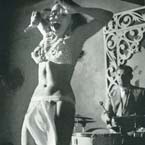
The young beauties of Bourbon Street gained star status. They had their own hairstylists, maids, assistants, agents, and managers. They mingled with visiting celebrities. Some exotic dancers were given small roles in films. Lily Christine the Cat Girl graced the cover of dozens of national magazines, and appeared in a few movies. Considered the top attraction on Bourbon Street, she performed at Leon Prima’s 500 Club. Musician Sam Butera, who worked with “the Cat Girl,” recalls her popularity, “One time they had a hurricane threatening. People were standing outside the 500 Club a block long waiting to get in. That’s how popular she was. With a hurricane warning!”
Controlled publicity was a convention of the time on Bourbon Street. Some clubs promoted their stars by putting their images on drinking glasses and postcards. Some of the dancers had drinks named after them. Getting arrested on obscenity was always good for a headline in the newspaper. A few exotics from Bourbon Street staged elaborate catfights or public displays that landed them spreads in LIFE magazine, the most-read magazine in the country at the time. Blaze Starr became quite famous for her affair with Governor Earl Long. The nationwide scandal became the focus of her autobiography, which later became the basis for a major motion picture.
The French Quarter had a seamier side. Pimps, prostitutes, criminals, and mob figures inhabited the Quarter. And B-drinking, in which strippers tempted men to buy them drinks for a cut of the profit, was rampant–and illegal. And, since everyone dressed up to attend a show, the girls often didn’t know if they were sitting next to a wealthy oil man, or an oily thug.
Politicians courted their own doom by enjoying themselves in the clubs, and it was ultimately their undoing that brought down the final curtain on girlie burlesque. During the 1960s, New Orleans district attorney Jim Garrison “cleaned up” Bourbon Street. The clubs were raided, and girls were arrested for charges of B-drinking and obscenity. To cut costs, the club owners first got rid of the bands, and replaced them with records. The sexual revolution of the Sixties eventually brought in go-go dancers, porn films, and strippers whose acts focused on flesh more than flash. Top musicians like Al Hirt and Pete Fountain survived, but the great burlesque queens of the 1950s did not.
For show dates and times, visit www.bustoutburlesque.com. Times Picayune theater critic, David Cuthbert says, “‘Bustout Burlesque’ has authenticity, electricity, and lubricity. It’s a fun night out to savor the lost art of the striptease, lovingly re-created and performed by gloriously good-looking girls who are oh, so naughty, but oh, so nice.”
Rick Delaup is a native of New Orleans, and the creator of Eccentric New Orleans and producer of Bustout Burlesque. He graduated from De La Salle High School, and spent a year at L.S.U. in Baton Rouge before going to film school in Chicago. He graduated from Columbia College in 1990 with a B.A. in Communications with a concentration in documentary filmmaking. He is an independent producer on a mission to tell the true, uncensored stories of real New Orleans people.